Multilingual programmes
Coordinate one study across countries and languages
Give country teams and language reviewers controlled responsibility for their version, while maintaining one source instrument, one publication process and comparable response data.

A multilingual rollout is not only translation. It requires ownership, deadlines, approval, source-text change control, a respondent experience that holds in every script, and analysis of the language effects that creep in when the same study runs in several places at once. The translation mechanics, the console, review states, back-translation and RTL rendering, live on the multilingual delivery feature page; this page is about running one study across countries, teams and language owners.
FlexiSurvey treats the programme as one source instrument with many faithful renderings rather than a collection of loosely related projects. Country teams and language reviewers get controlled responsibility for their locale, the publication process keeps unfinished content out of the field, and the captured language travels with every response so analysis can be sliced by locale, including offline-first collection in places where language support that stops at the browser would only be half an answer.
Who this is for
- Research programmes running across multiple countries or regions
- Government and public-sector bodies serving diverse communities
- Global brands conducting cross-market CX or employee research
- Any team where "add a language" currently means "start a new project"
The pain we solve
If any of these sound familiar, FlexiSurvey was built with your team in mind.
Language ownership is unclear
Who owns the French version, who is allowed to sign it off, and who gets told when something changes, is usually an email thread rather than a defined responsibility.
Source-text changes silently desync locales
A late edit to the source language does not reliably reach every translated version, so locales drift apart without anyone noticing.
No record of who approved which language
When approval lives in a shared document, you cannot show later that a linguist signed off the version that actually went to respondents.
Comparability across locales is hard to defend
Rolled-up analysis loses the ability to slice by language, even though that is often where translation effects and the most interesting signal live.
How FlexiSurvey fits
Capabilities we lean on hardest for this kind of work.
Assign ownership by language
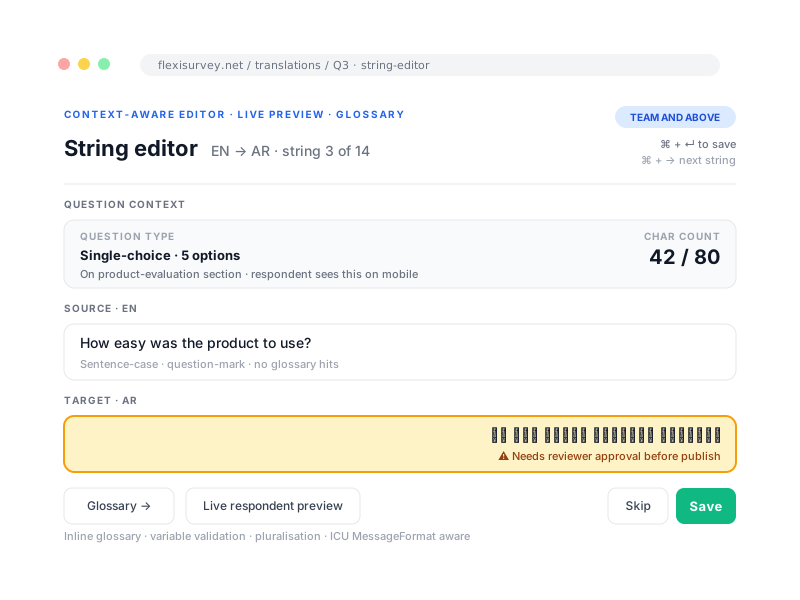
Give translators and reviewers controlled responsibility for their own locale, with language-specific roles and review states, so each version has a named owner and an explicit sign-off rather than an assumed one.
Control the publication process
Track completeness and approval per language and keep unfinished content out of the field by default. When the source text changes, language owners are flagged to re-review, so a late edit cannot quietly leave a locale behind.
Deploy approved locales across web and field
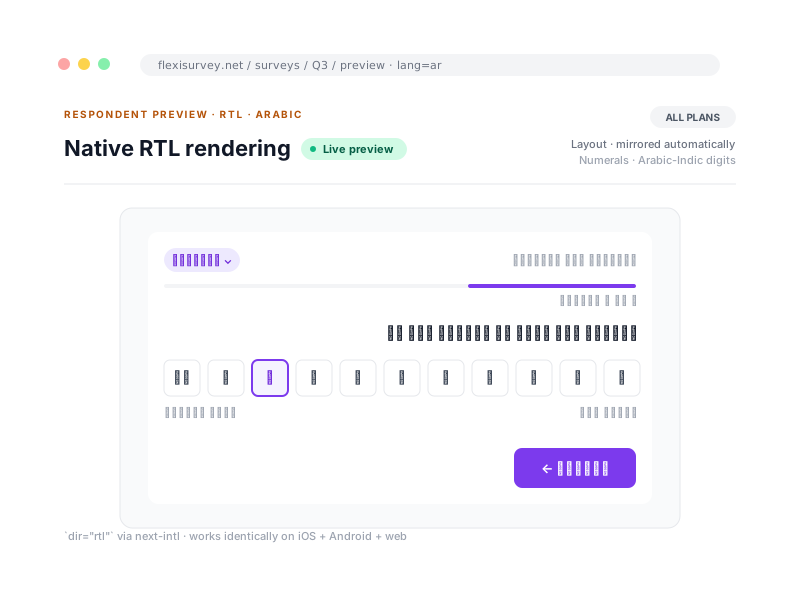
Push approved languages to both web and offline mobile collection, with right-to-left layout for Arabic and proper rendering of non-Latin scripts, so a multilingual study holds together even when work moves far from head office.
Monitor and document by locale
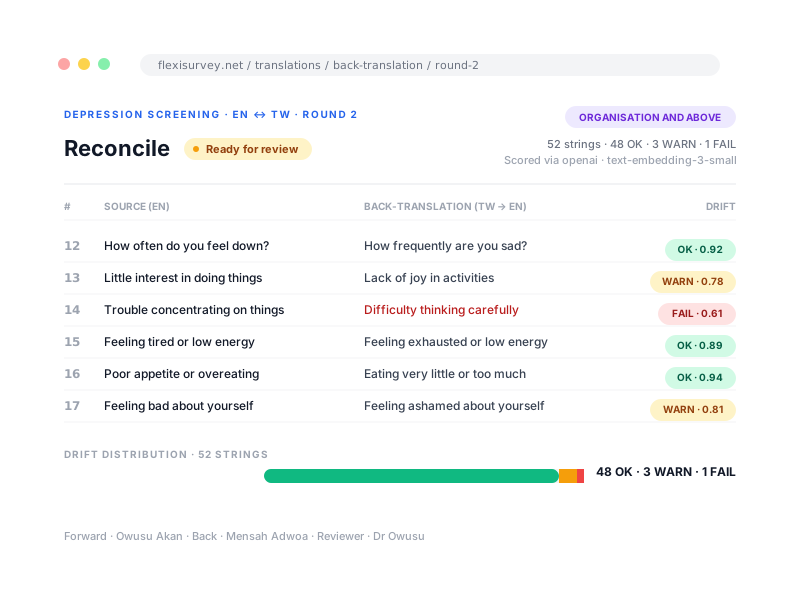
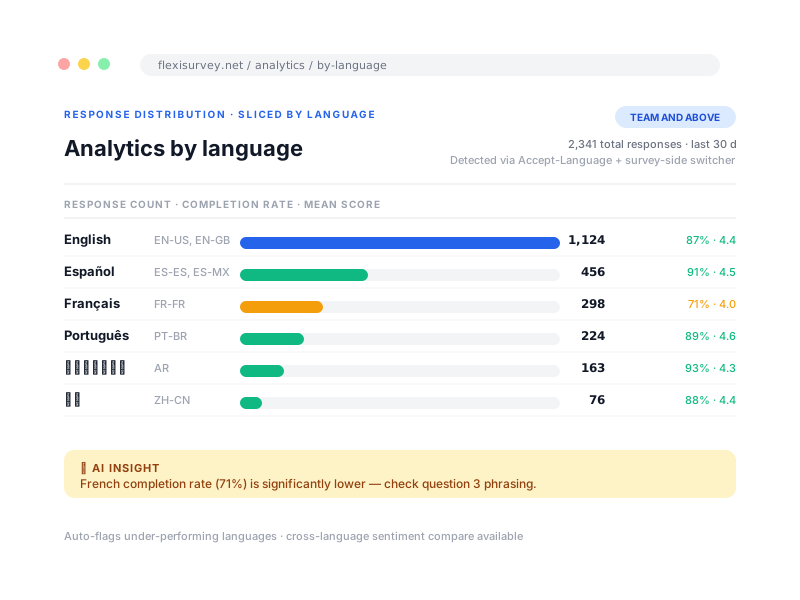
Watch completion and response patterns by locale, keep one variable and coding structure across languages, and document revisions for the next wave or reporting cycle, with back-translation review where item equivalence has to be defensible.
Typical outcomes
What teams like yours usually report in the first few months.
One study, many languages
No parallel studies per language. One source instrument, one publication process, many faithful renderings.
Approval you can audit
Every translation has a named owner and a recorded sign-off, defensible to clients and reviewers.
Comparable across locales
One coding structure and response-language metadata keep locales comparable and translation effects visible.
Related capabilities
Want to go deeper on any of these? Jump straight to the feature page.
Show us your country and language matrix
Tell us which countries and languages you are running, and we will walk you through ownership, approval and rollout across web and field.
Talk to our team