Research and evaluation
Keep the instrument, sample, fieldwork and analysis connected
Run cross-sectional or longitudinal studies without losing the relationship between the questionnaire version, language, panel wave, response and reported result.

Most survey tools stop at the data export: they hand you a flat file and leave the hard part, defensible analysis, to a separate stack. FlexiSurvey is built the other way around. Instrument design, multilingual delivery, longitudinal panels and analysis live on one platform, so the chain from a fielded question to a reported estimate stays intact and inspectable, which matters when your work has to survive a peer reviewer, an ethics committee or a methods appendix.
Longitudinal work is a first-class primitive, not a folder of cloned surveys: a panel carries a canonical variable codebook and each wave binds back to it, so moving a survey forward does not silently break your lineage. For complex samples, the design-based inference engine reports weighted, clustered, stratified estimates validated against R's `survey` package, available on Organisation and Enterprise plans, and a form-aware exploratory engine plus back-translation review keep instrument quality defensible.
Who this is for
- Academic and applied researchers running panel or longitudinal studies
- Evaluation teams at universities, think tanks and policy institutes
- Market-research groups running recurring brand, concept or user studies
- Teams that need reproducible analysis and clean exports to SPSS, R or Python
The pain we solve
If any of these sound familiar, FlexiSurvey was built with your team in mind.
Questionnaire changes are not traceable across waves
Adding a wave usually means rebuilding logic and hoping the comparisons still line up. A single schema change can quietly invalidate months of prior data.
Translation approval sits outside the instrument
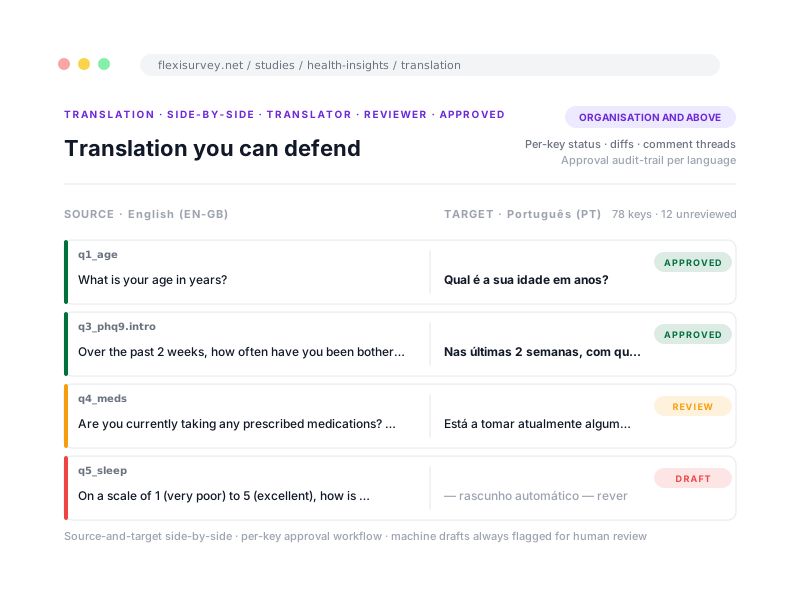
When sign-off happens in a shared document, no one can say later which translation was approved, or version it across waves.
Field data arrives without enough operational context
Responses turn up detached from the assignment, site or enumerator that produced them, so quality review starts from guesswork.
Reviewers cannot reconstruct how a result was produced
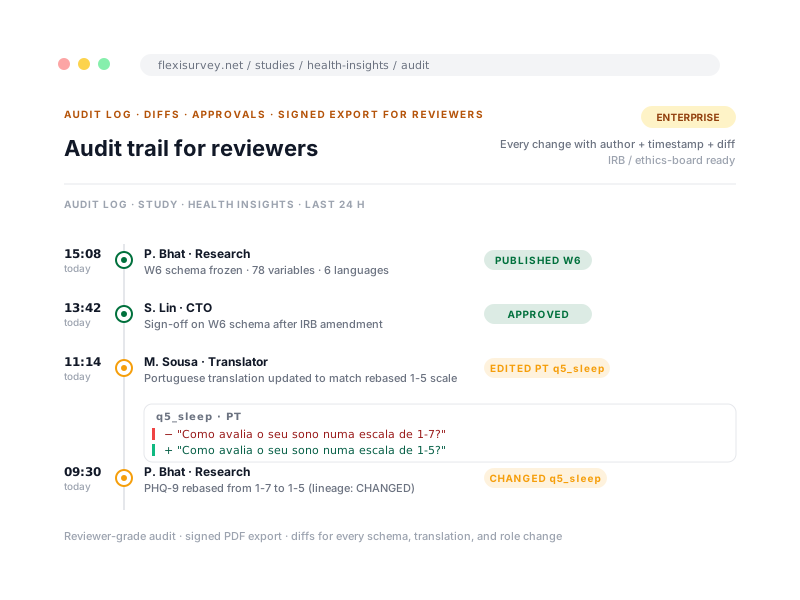
Ethics boards and peer reviewers ask what changed and when, and what denominator a figure used. Most platforms cannot answer precisely.
How FlexiSurvey fits
Capabilities we lean on hardest for this kind of work.
Design and review the instrument
Build with logic, quotas, computed values and survey-scoped roles, gather question-level comments, and keep a version history you can compare, so the instrument itself is reviewable before a single response arrives.
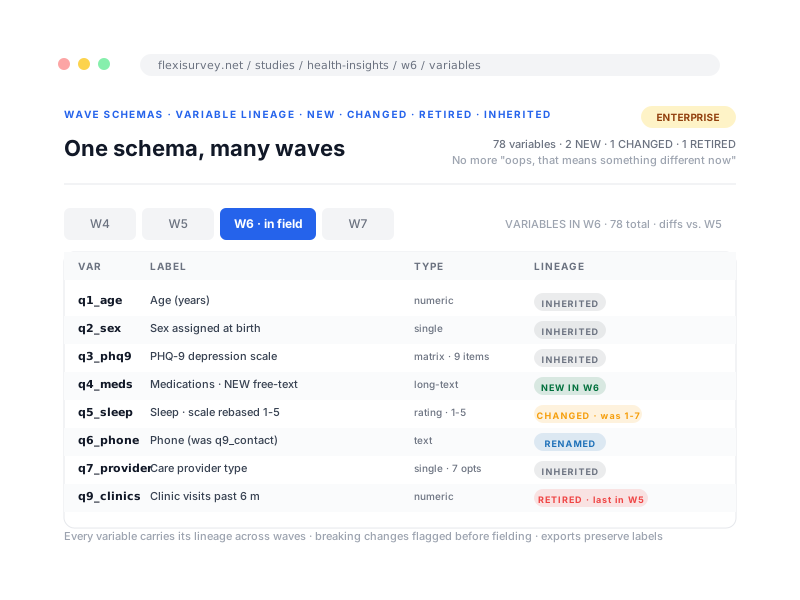
Manage languages and maintain panel lineage
Translate with explicit review and approval states, and carry a canonical variable codebook across waves so each wave binds back to the same variables by position. Cloning a survey forward never silently breaks comparability.
Collect with context, then explore and quality-check
Collect online or offline with attribution to field assignments, then explore using the questionnaire definition: skip-logic-aware denominators, the right statistic per question type, and fieldwork-integrity flags before anything reaches a result.
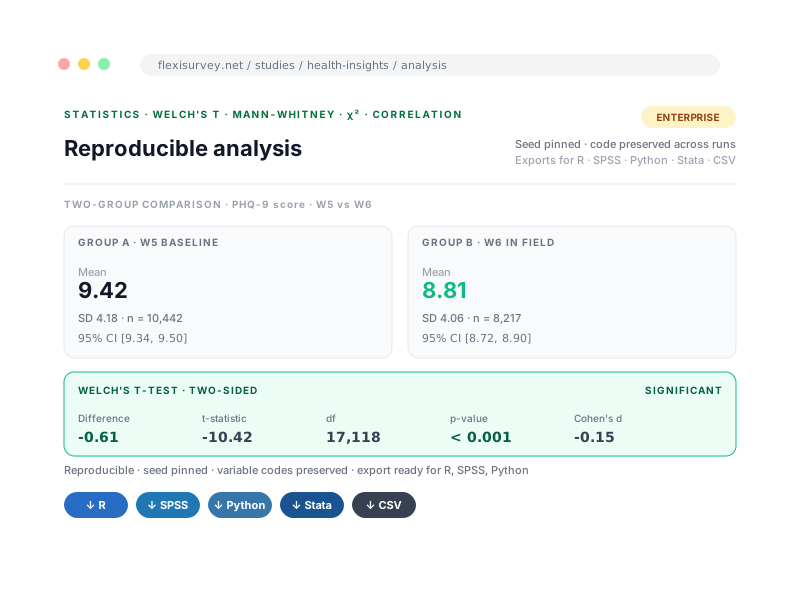
Run supported statistics, export, and preserve the evidence trail
Run design-based survey statistics where the sample calls for it, or export long or wide CSV with variable labels and a codebook for R, SPSS or Stata. Every edit to questions, logic and translations is logged, so the evidence trail is there when a reviewer asks.
Typical outcomes
What teams like yours usually report in the first few months.
Fewer manual joins
Instrument, panel, language and response data live together, so there are fewer back-end joins between fielding and analysis.
Clearer comparability across waves
A canonical codebook and explicit wave binding keep variables comparable instead of drifting between rounds.
Analysis-ready, reproducible exports
Clean exports with variable labels and codebooks travel with the study, so a collaborator can re-run the analysis.
Related capabilities
Want to go deeper on any of these? Jump straight to the feature page.
Review your next study design with us
Bring a questionnaire and a timeline, and we will walk you through how FlexiSurvey would run the whole thing, from instrument to analysis-ready extract.
Talk to our team